North Allston History
A Neighborhood Built on Diversity and Character
Click on the Images to Link to Articles from the Allston-Brighton Historical Society
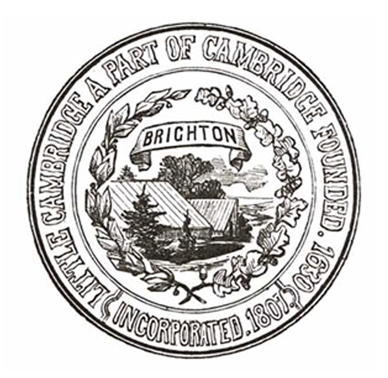
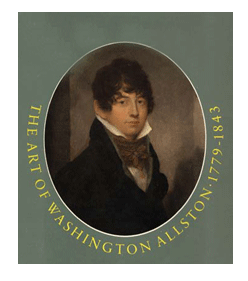
1868, the name Allston was applied to the eastern part of the town of Brighton in honor of a leading American painter of the early 19th century, Washington Allston, a Harvard graduate and long time resident of Cambridgeport. Although Allston never lived in the specific area of North Allston, and he is known for his European rather than American style of painting, city officials decided to honor his name, and Allston became the only city in the country named after an artist.
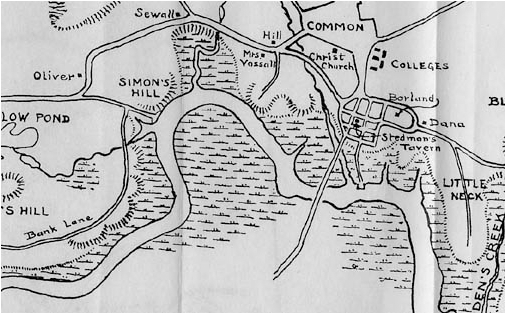
Map of North Allston, late 1600's
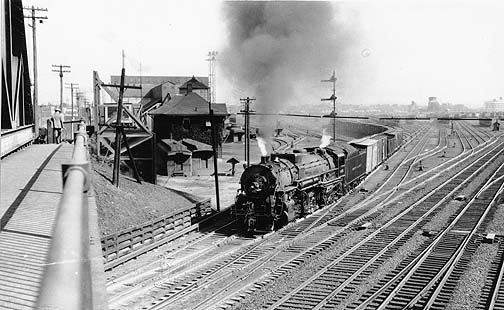
Cambridge Street Bridge, in 1930 and 2008
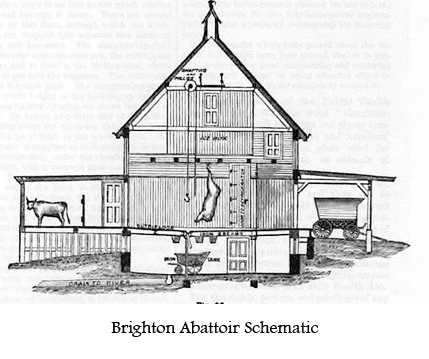
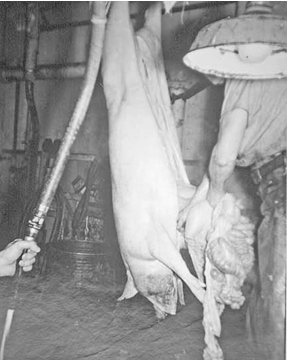
directly through the North Allston area. It defined the residential makeup of the neighborhood as it provided economic opportunities for railroad workers. The railroad also brought an important industry to the area – the cattle trade – which thrived in the unused lowlands of North Allston abutted by the Charles River.
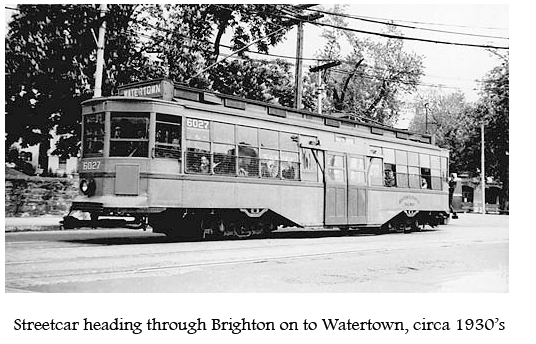
At the turn of the 20th Century, some of the nation’s first electric streetcars providing public transportation were developed in Brighton, and the suburban hub became a popular thoroughfare for the city of Boston. This changed the economic makeup of Allston, and brought quick development of both commercial and residential sections.
After Wold War II, and thanks to a housing boom in the city of Boston, North Allston became a destination for working class families, who came to the area looking for urban jobs in industrial labor. The cattle and slaughtering trades were prominent up until the 1950’s, when economic investment in the area dwindled off and North Allston became a secondary suburb to Boston, rather than its own independent economic area.
Streetcars of the 1950's and the modern MBTA T of today
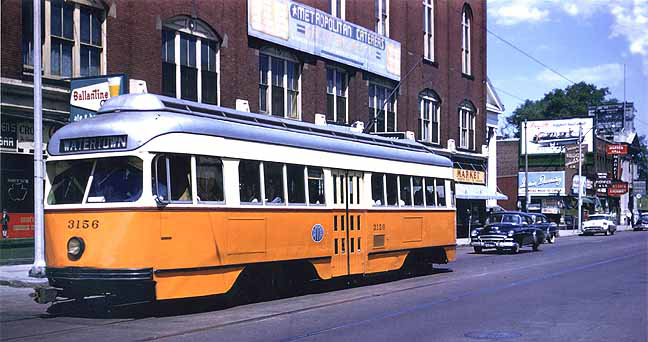
Today, North Allston is characterized by its residents as fostering harmonious diversity with ethnic and racial harmony, and it’s neighbors represent the true ‘Melting Pot’ of America - boasting African American, Irish, Italian, Lithuanian, Jewish, Polish, Brazilian, Chinese, and a whole mix of other neighbors from diverse backgrounds in the small neighborhood sections of Lower Allston.
Listen to North Allston resident, Harriet Kotomori, describe her neighborhood
Copyright Galen Moran Mook - Boston University College of Communication 2008