
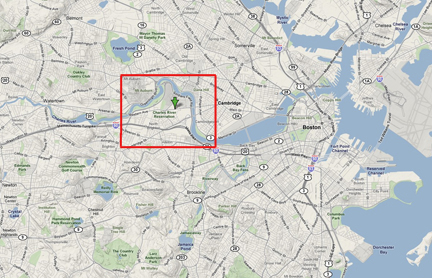
The somewhat secluded section of Allston-Brighton known as North Allston is separated from the rest of the city by the Mass Turnpike and is bordered by the Charles River
History of
North Allston
In the 18th century, North Allston was technically a part of Cambridge, and was known as ‘Little Cambridge,’ until in the early 19th Century residents became frustrated with Cambridge’s refusal to keep up the bridge over the Charles, so it seceded and formed itself as an incorporated town of Brighton. In 1868, the name ‘Allston’ was applied to the area when a new Post Office opened up and city officials decided to title the town after Washington Allston, a famous American painter and Harvard graduate who once lived in the area.
Allston-Brighton was famous for an industrial slaughterhouse and cattle fair that was supposedly the second largest in the nation, outside of Chicago. The industry brought many working class
families who have remained in the neighborhoods for generations.
Historically, Allston-Brighton has always been a melting pot of races and cultures, a thoroughfare and transportation hub for the city of Boston, and it was the first streetcar suburb in the country.
North Allston Today
The section of Allston known as North Allston, west of Boston and north of the Massachusetts turnpike, has a fierce solidarity as a neighborhood. It is a diverse, working class section of the city, full of families and long-standing residents who have always taken pride in their town, affectionately referred to as ‘Lower Allston’ due to its low elevation on the banks of the Charles River.
Even though it is prime real estate, being surrounded by the Charles River, with easy access to freeways and to major points north, including Harvard Square and Cambridge, the area is surprisingly underdeveloped, with little economic opportunities and few retail locations. Along the turnpike and river, industrial warehouses dominate the land, providing economic opportunities for the small amount of workers lucky enough to have jobs, but few of these workers actually live in the area. One major flaw in the urban design of North Allston is that it is cut into sections by busy thoroughfares, such as North Harvard Street and Western Avenue, which act as roads that channel traffic into Cambridge to Central Square and Harvard Square. Drivers pass through North Allston without any incentive to stop, and the lack of retail opportunities and inundation of construction traffic detracts from the aesthetic and functional value of the area.
But the people that populate the center sections of North Allston are strong, family oriented neighbors that do a lot to provide good homes for permanent residents. Many families stay for generations, and the area boasts the Honan-Allston library, a building that is highly regarded in the architecture world, and two prominent public schools, along with four area churches that provide services in English, Spanish, and Portuguese - demonstrating the diverse make up of the North Allston residents.
Click Here for more information on the North Allston Community
Harvard Comes In
Harvard University has long been a staple of the North Allston section of Allston-Brighton. Their first move into that side of the river was in 1897, with the construction of athletic facilities and, in 1903, Harvard Stadium, the nation’s first reinforced concrete sports structure, was completed.
In 1927, Harvard Business School established residency in Allston, which brought a large Harvard footprint with the construction of dormatories and graduate housing as well as office space.
In 1996, Harvard first started
acquiring individual plots of land in North Allston with the intent of
expanding their campus to nearly double in size within 50 years. With the help of the city of Boston, they purchased almost all of the land between Watertown to the west and the Charles River to the east, save the two prominent neighborhood
sections that fall on either side of North Harvard Street.
Last year, Harvard unveiled their
Institutional Master Plan, which laid out the next fifty years of University planning, much to the dismay of many North Allston residents.
Copyright Galen Moran Mook - Boston University School of Communication 2008